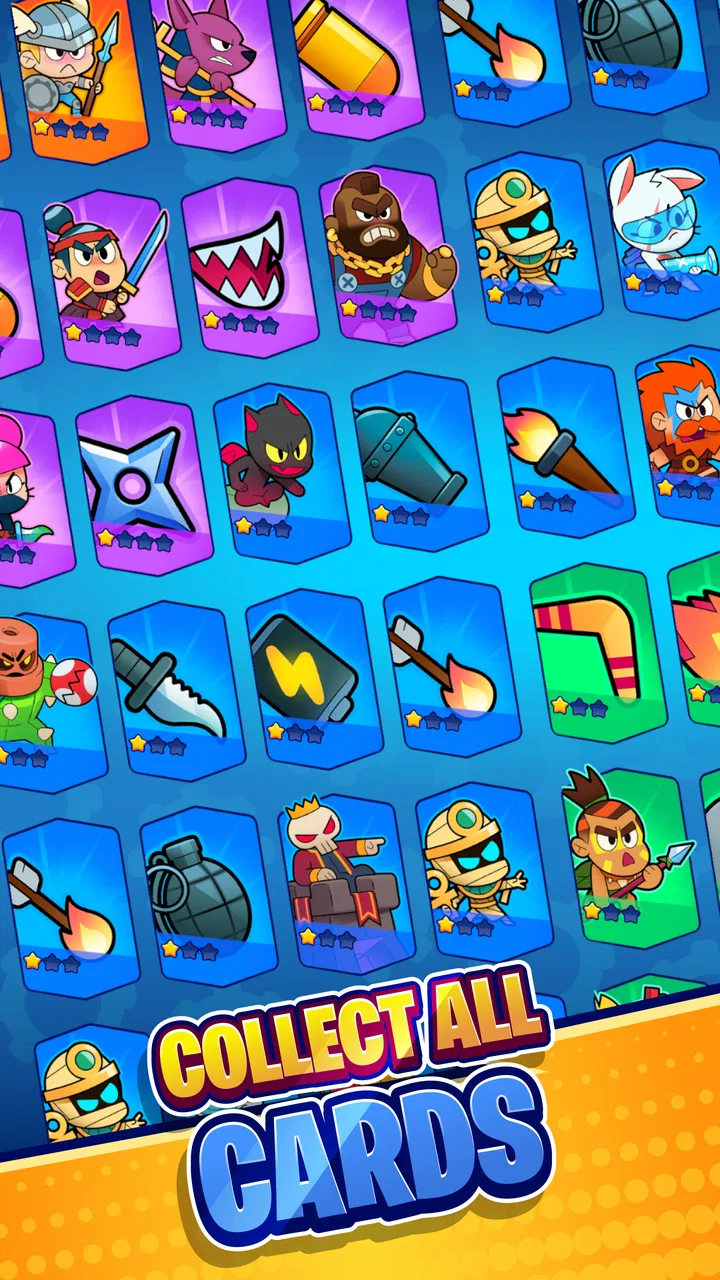
Gear Fight!
- 4.2
- Rating
- 5.00M
- Installs
- Free
- Price

 Analysis by App-foxy
I went into Gear Fight! expecting a quick arcade distraction, and that is exactly where it works best. The central idea is simple: you turn gears while dealing with enemies. The appeal is not a long story or a complicated control scheme; it is the small burst of concentration needed to react, rotate, and keep the action moving. After several sessions, I found it easiest to enjoy when I treated it as a short, repeatable challenge rather than a game I needed to play for hours.
That distinction matters. Some arcade games are built around reflexes alone, while others bury the player under upgrades, menus, or elaborate progression. This one sits closer to the quick-action side of the category. It is made by VOODOO, costs nothing to download, and is rated for Everyone 10+. The current version is 6.9.0, and it runs on Android 8.0 or later, so it is accessible to people using older compatible phones as well as newer devices.
How the basic play loop feels in everyday use
My normal session starts with the same habit I use for most compact arcade games: I play one round without trying to optimize anything. That first attempt tells me whether the controls feel natural and whether the visual pace is comfortable. In Gear Fight!, the important adjustment is learning to read the gear movement as an action rather than decoration. The gears are not just a background theme; they are the part of the interaction that gives the game its identity.
You May Also Like

 Blood Strike: 2.5 Anniversary
Blood Strike’s Loadouts Turn Every Drop Into a Tactical Gamble
A close look at Blood Strike’s custom loadouts: how fast access to signature weapons reshapes its battle royale rhythm, rewards preparation, and narrows the gap between fights.

 Pandora - Music & Podcasts
Pandora’s Music Is Easy to Start, but Harder to Recover
Pandora’s strength is its low-effort path from a seed to a station. Its weak spot is how much confidence it asks you to place in connection, setup, and quiet recovery.

 8 Ball Pool
 Is Built on Rivalries, Rematches, and Routine
A close look at the rivalries, rematches, shared routines, and unanswered safety questions that turn a quick pool match into a persistent mobile community.

 Samsung Music
’s Quiet Strength Is Playing What You Already Own
Its reach comes less from spectacle than from dependable access to a personal library. That simplicity is both the app’s strongest retention engine and its ceiling.

 AccuWeather: Weather Radar
AccuWeather Review: A Quick, Clear Forecast for Everyday Decisions
For everyday plans, the best forecast is the one you can understand quickly. AccuWeather makes rain timing, radar, and local conditions easy to act on, with a few trade-offs.

 Hill Climb Racing
Why Hill Climb Racing Still Turns Crashes Into One More Run
A tiny car, a bumpy hill and one more upgrade: Hill Climb Racing keeps resurfacing because its simple chaos makes every near-miss feel personal.
More From Our News Desk



The store summary describes the premise in a few words, but the practical experience is more about timing than the wording suggests. I found myself watching for the moment when a turn would create a useful opening against an enemy. That creates a modest but satisfying mental rhythm: observe the arrangement, make a turn, see how the situation changes, then decide whether to repeat the same approach or change direction.
This makes it a good fit for short gaps in the day. I can imagine playing it while waiting for a coffee, taking a break between tasks, or sitting on public transport. It does not demand the kind of emotional commitment that a large role-playing game does, and I do not need to remember a complicated plot after putting it down. The trade-off is that players looking for a deep campaign or a large world may find the experience too focused.
The first useful habit is to avoid frantic tapping. When an enemy appears, my instinct is sometimes to act immediately, but that can make the gear layout harder to read. A brief pause often gives me a better view of what the current turn is likely to accomplish. This is not a special ability or an undocumented trick; it is simply a more reliable way to use the game’s central mechanic.
I also recommend playing with the phone held steadily rather than trying to operate it one-handed while walking. Arcade controls can look effortless, but small mistakes become more noticeable when the screen is moving or when a thumb covers part of the action. For a quick game, the difference between a calm setup and a rushed one is surprisingly noticeable.
Another everyday scenario is using it as a reset between demanding tasks. I would not choose it when I need complete silence and zero distraction, but a short round can provide a clean break because the objective is immediately understandable. It is more purposeful than endlessly scrolling, yet light enough that I do not feel punished for stopping after a brief attempt.
What to check before settling into a routine
Before playing regularly, I would check the device settings that affect any fast arcade game: sound level, notification interruptions, screen brightness, and whether the phone is in a mode that makes accidental touches more likely. Gear Fight! is easier to judge when the display is clear and the phone is not constantly switching attention to another alert. These are simple adjustments, but they help separate a control problem from a device problem.
Brightness deserves particular attention. A very dim screen can make the moving parts harder to distinguish, while maximum brightness may be uncomfortable during a longer session. I prefer a middle setting and then adjust it to the surrounding light. This is especially useful because the game’s visual information is concentrated in a relatively small area; losing contrast can make a manageable situation feel confusing.
Sound is more personal. Some players use audio cues to stay engaged, while others prefer to mute arcade games and focus on the screen. I found that the game remains suitable for quiet public places when the phone is silenced, but the experience feels more immediate with some sound. I would test both approaches rather than assuming one is automatically better.
It is also worth checking the purchase controls before handing the phone to a child. The game is free, but it includes in-app purchases ranging from $0.99 to $99.99 per item. That does not make the game unsuitable, yet it does mean the free entry point and the possible spending experience are different things. I would set a device-level purchase safeguard if someone else regularly uses the phone, particularly because the age rating is Everyone 10+ rather than an unrestricted all-ages label.
The free price is one of its strongest practical advantages. You can install it and decide quickly whether the gear-based play is for you without paying up front. At the same time, free arcade games often test a player’s patience through optional purchases or repeated attempts. I would approach it with a clear personal rule: enjoy the basic loop first, and do not spend simply because a difficult moment feels frustrating.
The game has attracted over a million installs, with an average rating of 4.1 from around fifty-one thousand ratings and roughly one and a half thousand written reviews. Those figures suggest that it has reached a substantial audience, but they should not replace personal testing. A player who loves compact gear puzzles may rate it highly, while someone wanting a traditional action game may not connect with the same design.
Repeatable patterns that make short sessions better
Once I understood the basic rhythm, I started using a repeatable three-step approach. First, I scan the screen instead of touching immediately. Second, I choose the turn that appears to create the clearest response rather than the most dramatic one. Third, I reassess after the move instead of assuming that the previous plan still applies. This keeps the game from becoming a blur of automatic inputs.
The useful insight is that speed should come from recognition, not panic. Experienced players often look fast because they have reduced the number of decisions they make under pressure. I found that I became more consistent when I focused on identifying familiar arrangements and responding to them in the same way. That is more dependable than trying to improvise a new solution for every moment.
I also try not to overcorrect. If a turn has produced a reasonable position, immediately making another move can undo the advantage. The temptation is strong in an arcade game because the screen encourages constant action, but a controlled pause can be just as valuable as another input. This is one of the small differences between merely playing and building a useful routine.
For short sessions, I would set a personal stopping point based on attention rather than time. If I notice that I am touching without reading the gear layout, the next attempt is unlikely to teach me anything. Stopping there makes the next session more enjoyable and prevents the game from turning into repetitive frustration. Gear Fight! works better as a series of focused bursts than as a test of endurance.
Another practical pattern is to change only one habit at a time. If a round goes badly, I do not simultaneously alter my grip, speed, audio, and decision-making. I might first slow down my opening move, then see whether the result improves. This makes it easier to understand what is actually helping. It is a small approach, but it suits a game whose mechanics are simple enough that tiny changes can have a visible effect.
Players comparing it with familiar arcade alternatives should think about the type of satisfaction they want. A conventional endless runner rewards lane changes and rapid reactions. A match-style puzzle game usually rewards recognizing combinations. Gear Fight! feels more tactile and positional because the gears shape the action, but it does not offer the same kind of relaxed pattern matching as a slower puzzle title. If you want constant forward motion, a runner may be better; if you want deliberate board planning, a dedicated puzzle game may be the stronger choice.
Where the design starts to show its limits
The focused concept is both the game’s strength and its main limitation. Turning gears to confront enemies is distinctive enough to make the first sessions memorable, but a narrow central mechanic can lose its freshness for players who need a large variety of objectives. I enjoyed the clarity, yet I would not recommend it as the only game on a phone for someone who expects a deep progression system or a broad set of play styles.
The game also asks the player to accept a certain amount of repetition. That is normal for arcade design, but it becomes important when deciding whether to spend money inside the app. A purchase may make sense for someone already enjoying the loop and wanting to support continued play, but it is not a solution for a player who dislikes the basic gear interaction. No optional purchase can turn the game into a different genre.
Another limitation is the dependence on visual attention. I can play casually, but I cannot treat it like an audio-first game or something to operate while doing another task. The gear arrangement needs to be read, and enemy encounters need a response. That rules it out for distracted play, walking, or any situation where the screen cannot receive steady attention.
Older compatible phones may run it because the minimum requirement is Android 8.0, but general compatibility does not guarantee that every device will feel equally comfortable. Screen size, touch responsiveness, and performance can all influence an arcade game. If the controls feel inconsistent, I would first test the phone without a case that interferes with the screen edge and close unnecessary background activity before blaming the design.
I would also skip it if my main goal were a story-driven adventure, a competitive multiplayer experience, or a game with extensive character customization. Nothing about the core pitch suggests that it is trying to serve those needs. Its value comes from immediate interaction, not from pretending to be a larger game than it is.
Who will get the most from it
Gear Fight! is best for players who like compact arcade sessions with a clear mechanical theme. It suits someone who enjoys learning a small system, improving reactions, and replaying a familiar style of challenge. It is also a sensible option for a new player who wants a free download and does not want to begin with a complicated tutorial or a long commitment.
I would recommend it to a friend who often says they have only a few minutes to play. The game can fit that schedule naturally, and the gear mechanic gives those minutes more character than a completely generic tap-to-score title. It is also a good choice for someone who likes experimenting with pace: calm observation, deliberate turning, and quick responses all feel relevant to the experience.
I would be more cautious with a friend who gets annoyed by repeated attempts or who expects every session to reveal a new system. The game’s appeal depends on enjoying refinement. If repeating a familiar loop feels like work, its free price will not change that reaction. In that case, a puzzle game with a wider range of boards or an arcade title with more varied modes would probably be a better match.
The age rating makes it approachable for a broad audience, but I would still explain the purchase range before recommending it for family use. The game itself is easy to understand, while the spending side deserves adult attention. That is a practical distinction many players overlook when they see that an app is free to download.
My final view after learning its rhythm
VOODOO has built Gear Fight! around a compact idea that is easy to start but still rewards better habits. I like that the game does not require a long explanation before the first meaningful decision. Its best moments come when I stop reacting blindly and begin reading the gears as a changing situation. That gives the simple premise enough depth for regular short sessions.
My strongest recommendation is to play it with intention: check the screen and sound settings, keep the phone steady, pause before rushed moves, and judge purchases separately from enjoyment of the core loop. Those habits make the experience clearer and help reveal whether the game genuinely suits you. They also prevent the common mistake of confusing impatience with difficulty.
With a 4.1 average and a large existing audience, it is clearly not an obscure experiment, but popularity is not the reason I would install it. I would choose it because the gear-based interaction offers a different flavor from the usual runner or match puzzle. The free entry point makes that experiment easy, while the optional purchase range means I would keep spending under control.
My verdict: Gear Fight! is worth trying if you want a focused arcade game that turns a simple gear mechanic into a repeatable timing challenge. I would not call it a replacement for a deeper arcade collection, and I would skip it when I want narrative, exploration, or long-term variety. For quick breaks and gradual improvement, though, it has a clear purpose and enough personality to earn a place on my phone.
FAQs for Gear Fight!
01What is Gear Fight! and what makes it unique?
Gear Fight! is a dynamic multiplayer battle game where players customize and control mechanical warriors in thrilling combat arenas. What sets it apart is its unique blend of strategy and action, allowing players to upgrade their gear and skills, creating a personalized gameplay experience that keeps every match fresh and exciting.
02How does the customization system in Gear Fight! work?
In Gear Fight!, customization is key to success. Players can choose from a wide array of gears, weapons, and abilities to tailor their mechanical warriors. This system allows for strategic depth, as each combination can be adapted to suit different playstyles and counter opponents effectively. Regular updates ensure new items and abilities keep the game dynamic.
03Is Gear Fight! free to play, and are there in-app purchases?
Gear Fight! is free to download and play, offering plenty of content without cost. However, it includes in-app purchases for players looking to enhance their experience with cosmetic items, faster progression, or exclusive gear. These purchases are optional and designed to support the game's development and maintenance.
04What platforms is Gear Fight! available on, and are there any system requirements?
Gear Fight! is available on both Android and iOS platforms. For optimal performance, it requires Android 8.0 or later and iOS 11.0 or later. The game is designed to run smoothly on a wide range of devices, but high-end devices will provide enhanced graphics and performance.
05Are there multiplayer modes in Gear Fight! and how do they work?
Yes, Gear Fight! features robust multiplayer modes, including real-time PvP battles and team-based matches. Players can join friends or match with others globally to compete in various arenas. The matchmaking system is designed to pair players of similar skill levels, ensuring balanced and competitive gameplay experiences.
Pros
- Intuitive controls make gameplay accessible.
- Vibrant graphics enhance visual appeal.
- Wide variety of gear keeps players engaged.
- Regular updates add new features and content.
- Multiplayer mode fosters competitive play.
Cons
- Occasional lag during intense battles.
- In-app purchases can be pricey.
- Limited offline gameplay options.
- Tutorial could be more comprehensive.
- Ads can disrupt the gaming experience.

Gear Fight!
Gallery